"May Contain" vs. Certified-Free: How to Read a Food Label
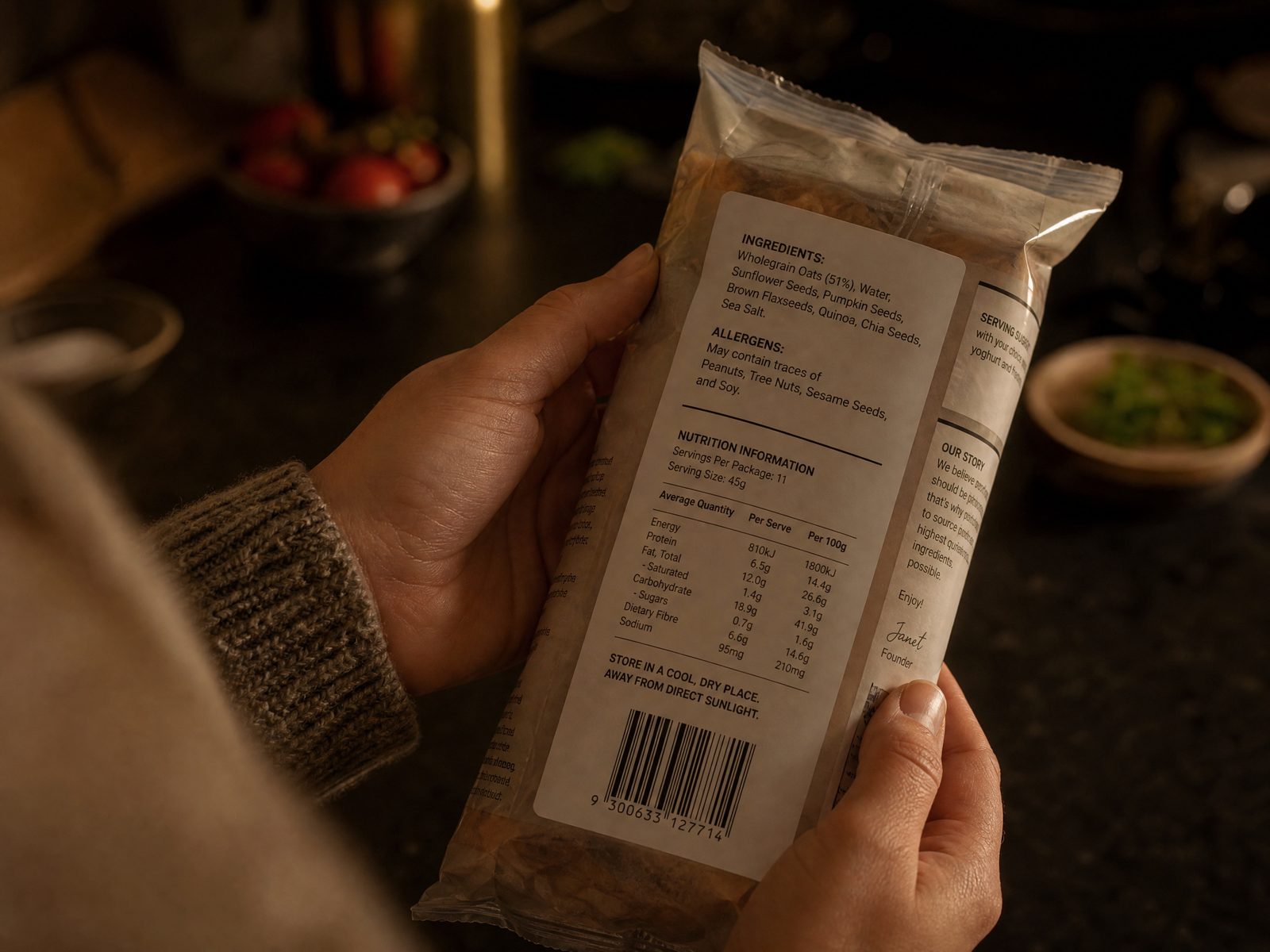
Here's the question I get more than any other: "It says 'may contain peanuts', but does it actually contain peanuts, or are they just covering themselves?" It's the right question. And the honest answer is one most people find unsettling at first: nobody is required to tell you, and the words don't mean what they seem to.
Let me walk you through a label the way I read one, so you never have to guess in the dark.
"May contain" isn't a law
That phrase, along with "made in a facility that also processes," "made on shared equipment with," and "produced in a plant that handles," is precautionary allergen labeling, or PAL. It is voluntary. There is no federal law requiring it, no standard for when a company must use it, and no defined threshold for how much allergen triggers the warning.
Two things follow from that, and you need both:
- A "may contain" warning is not a measure of risk. One company uses it out of an abundance of caution; another uses it only when contact is likely; a third doesn't use it at all. You can't rank two products by their warnings.
- The absence of a warning is not a guarantee of safety. A product with no precautionary statement can still carry a real risk of cross-contact, because the statement was never mandatory in the first place.
So when a label is silent, that silence tells you nothing. That's the part that surprises people, and the part worth sitting with.
What you can trust on a label
Not everything is murky. The law draws a hard line around intentional ingredients.
- The ingredient list must name any of the nine major allergens used in the recipe, in plain language.
- The "Contains" statement (e.g., "Contains: milk, soy, wheat") restates those allergens in one clean line, usually right below the ingredients.
If your allergen appears in the ingredient list or the "Contains" line, the product is off the table. Full stop. This is the reliable, legally backed part of the label. Read it first, every time.
So what is "certified-free"?
This is where families find real footing. A third-party certification means an outside organization has audited the manufacturer's process (supplier controls, dedicated lines or facilities, cleaning protocols, and product testing) against a published standard. It's a meaningfully higher bar than a marketing claim.
A few you'll see:
- Certified Gluten-Free. Often tied to testing at or below a set threshold (the FDA's regulated "gluten-free" claim requires less than 20 parts per million of gluten). [VERIFY: specific ppm thresholds vary by certifying body; confirm the exact standard for any seal you cite, e.g., GFCO's threshold.]
- Third-party allergen-free certifications (for example, programs that certify a product as free of specific top allergens). These verify a process, not a promise of zero risk for every individual. [VERIFY: name the specific certifying programs/seals relevant to the brand or product before publishing; don't generalize a named seal you haven't confirmed.]
- "Made in a dedicated [nut]-free facility." Not a third-party certification on its own, but a strong manufacturer statement, stronger than a shared-line product with a "may contain." Best when you can confirm it.
The key mental shift: a certification describes what the manufacturer controls, verified by someone other than the manufacturer. That's why "Certified" beats "free" in plain text, and why both beat the silence of a missing warning.
The phrase I never let families lean on: "safe"
I don't call products "safe," and I'd gently push back on any brand that does. Safety isn't a property of the food: it's the match between that product's actual handling and your specific allergens and threshold, which only you and your allergist can judge. A peanut-free granola bar made on shared equipment is a very different object from one made in a dedicated facility, even if both say "peanut-free" on the front. Describe what's stated and certified, then decide.
How I read a label, in order
- "Contains" line first. If my allergen is there, I stop. Done.
- Full ingredient list anyway. Cross-check for the allergen under another name, and for related ingredients (e.g., "natural flavors," which can occasionally warrant a call to the manufacturer).
- Precautionary statement, read in context. I treat "may contain [my allergen]" as a reason to skip for us, but I never treat its absence as a green light.
- Certifications and facility statements. These move a product up my list; they don't replace steps 1 to 3.
- Re-read the label even on a repeat buy. This is the rule that saves you. Formulations change without notice: a "new and improved" recipe can quietly add an allergen or move production to a shared line.
When in doubt, call
If a label is ambiguous and the product matters to you, call or email the manufacturer and ask two specific questions: Is my allergen used anywhere in this product? and Is it run on shared equipment, and what's your cross-contact protocol? Write down who you spoke with and when. Companies that handle allergens well are usually glad to answer; a vague non-answer is itself information.
The takeaway
"May contain" is a voluntary phrase, not a verdict. Present or absent, it can't tell you how safe a product is. The ingredient list and "Contains" statement are the parts you can trust. Certifications tell you a process was verified by someone independent. And no label, however clean, replaces the plan you build with your allergist for your specific allergens. Read it like it's your job, because, for now, that part is.