

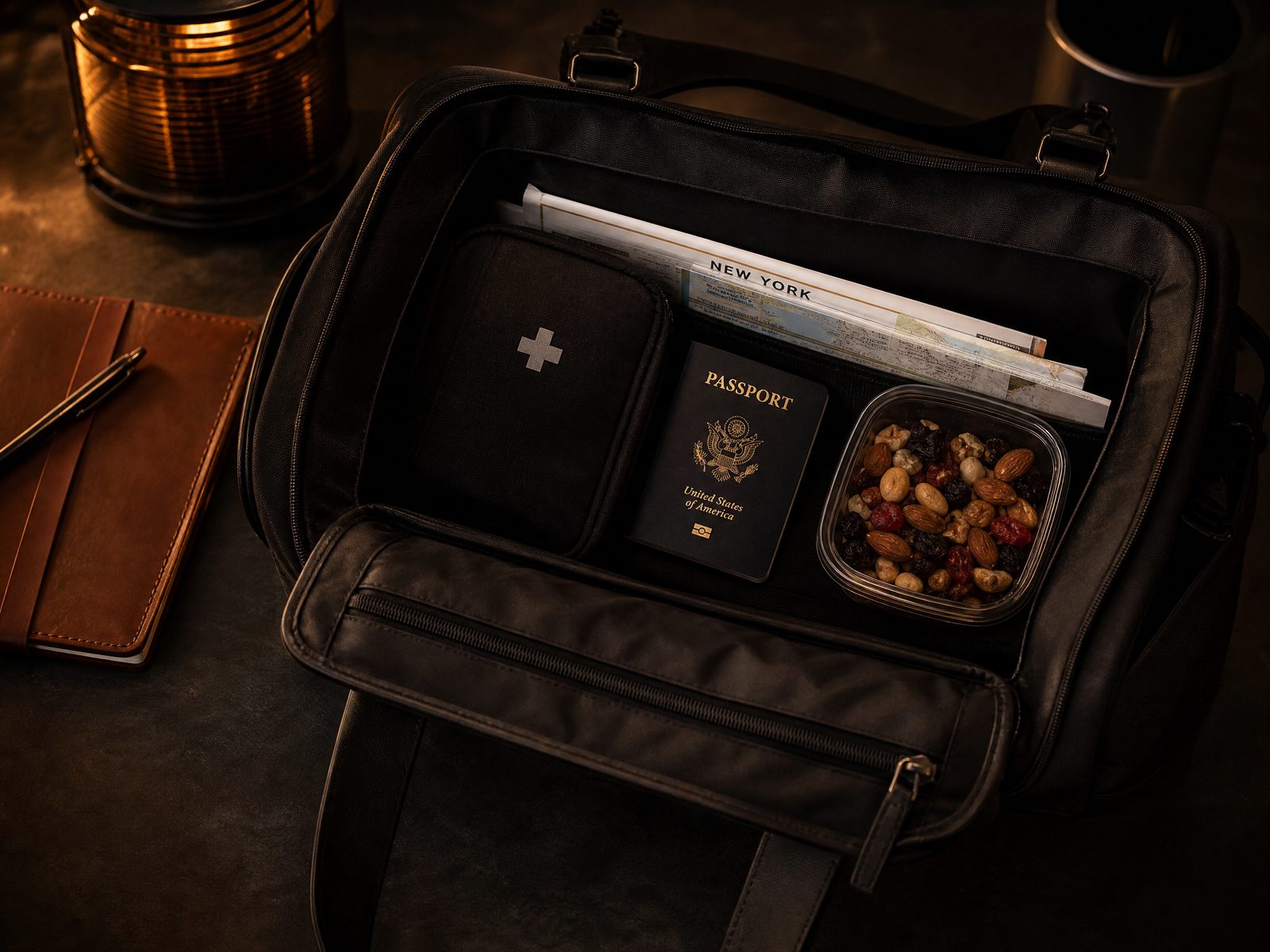
Traveling with Food Allergies: A Family's Playbook
Our first big trip after Graham's diagnosis felt like a dare. Somewhere between the packing list and the boarding pass, a quiet question set in: what happens if something goes wrong, far from home, in a place where nobody knows us? Eighteen years of traveling with a son who has severe dairy and egg allergies taught me the answer. Travel with food allergies isn't about eliminating risk. Nobody can do that. It's about carrying your plan with you, so a new city never means starting from zero.
Before you book: the plan comes first
The most important part of any trip happens before we leave the house. Talk to your allergist a few weeks out. Refill epinephrine so nothing expires mid-trip, and get more auto-injectors than you think you need. A written prescription and your action plan travel with you, both on paper and on your phone. Ask specifically about time zones and dosing for any daily medications, and about what "the nearest care" looks like where you're going.
Then research the destination the way you'd research a school. Where's the closest hospital? How do you say your allergens (and "call an ambulance") in the local language? A translated chef card (a small card listing your allergens and the cross-contact basics in the local language) is the single most useful thing you can pack for an international trip. Write it, or have it professionally translated; don't trust a rushed app translation for something this important.
Flying: pack the plan in your carry-on
Never put epinephrine in a checked bag. It rides in your carry-on, with you, along with your action plan and a doctor's note explaining why you're carrying medical devices and food. TSA and most airlines allow both. A note just makes the conversation shorter.
Call the airline ahead and ask about their allergy policy in writing; policies vary widely and change often, so confirm rather than assume. And bring your own food. We always do. Airplane meals and snacks are the definition of an unknown kitchen, and a long flight is the wrong place to gamble. Wiping down the tray table, armrests, and screen when you board is a small habit that heads off cross-contact from the last passenger.
Where you sleep: a kitchen changes everything
If your child reacts to more than a trace, look for a room with a kitchenette or book a rental with a real kitchen. I've cooked nearly every meal Graham eats by hand, and being able to cook even one reliable meal a day takes enormous pressure off: it means dinner is never a crisis, just a fallback you control. Pack a few shelf-stable staples and, if you're driving, a cooler of heat-and-serve meals you already trust at home. On the road, the meal you don't have to vet is worth its weight in gold.
Message the hotel or host before arrival: ask them to empty the mini-fridge for your medications and food, and ask how they handle guest allergies. You learn a lot from the answer.
Eating out in a new place
Everything we already do at home applies, just with more translation. Restaurants failed us too many times for me to wing it in a new city. Call ahead, off-peak, and ask the same two questions that work anywhere: Is my allergen used anywhere in this dish? and Is it prepared on shared equipment, and what's your cross-contact protocol? A chef card in the local language does the heavy lifting when the language gap is real.
Shared fryers, communal grills, and buffets carry the same cross-contact risks abroad that they do at home, no matter how a dish is described on the menu. And remember that ingredient norms differ by country: a "safe" swap at home may be made differently somewhere else. When a label is in another language and you can't verify it, treat it as unknown, not assumed.
If a reaction happens
Know the plan before you need it, because a reaction far from home is still the same emergency it is at home. If your child shows signs of a severe allergic reaction, use epinephrine right away and then call the local emergency number: in the U.S. that's 911; abroad, know the local equivalent before you land. Get to care even if the symptoms seem to settle. This is your allergist's protocol, carried into a new place, not a decision to make in the moment.
The mindset that makes it work
The families who travel well aren't the ones who found risk-free destinations: those don't exist. They're the ones who packed their plan, did the boring prep, and refused to let a diagnosis quietly shrink their map. That has been us for eighteen years. A food allergy asks you to plan more. It does not have to mean staying home. The world is still yours to show your kids; you just pack a little differently now.